
Ceiling fans are a practical addition to Brisbane homes, helping improve airflow and reduce reliance on air conditioning during warmer months. While installing a ceiling fan may appear straightforward, qualified electricians complete several important checks before starting the job. These inspections help ensure the fan is safe, compliant, and suitable for the space.
Here is what electricians typically assess before installing a ceiling fan in Brisbane homes.
- Checking the Existing Electrical Wiring
One of the first things electricians inspect before ceiling fan installation in Brisbane is the condition of the existing wiring. Older homes in Brisbane may have outdated or damaged electrical systems that are not suitable for supporting a new ceiling fan.
The electrician will determine whether the current wiring can safely handle the fan’s electrical load. They also check for loose connections, deteriorated insulation, and any signs of previous electrical issues. If upgrades are required, these are usually completed before installation begins.
- Assessing Ceiling Strength and Support
Ceiling fans are much heavier than standard light fittings, especially larger models designed for open-plan living areas. Electricians inspect the ceiling structure to confirm it can safely support the weight and movement of the fan.
This may involve checking ceiling joists, mounting brackets, and support beams. If the ceiling lacks adequate support, reinforcement may be required to prevent future movement or damage. Secure installation is essential for both safety and long-term performance.
- Confirming Ceiling Height and Clearance
Australian safety regulations require ceiling fans to be installed at appropriate heights. Electricians carefully measure ceiling height and ensure there is enough clearance between the fan blades, floor, walls, and nearby furniture.
In Brisbane homes with low ceilings, electricians may recommend flush-mount ceiling fans to maintain safe clearance. For higher ceilings, extension rods may be suggested to improve airflow efficiency.
These checks help maximise comfort while ensuring the installation complies with Australian standards.
- Evaluating Room Size and Fan Suitability
Not every ceiling fan suits every room. Electricians in Brisbane often assess the room dimensions before recommending the ideal fan size and blade span.
A fan that is too small may struggle to circulate air effectively, while an oversized fan can overwhelm the room and create excessive airflow. Electricians also consider ceiling height, room layout, insulation, and ventilation needs before installation.
In Brisbane’s humid climate, selecting the correct fan can make a noticeable difference in indoor comfort.
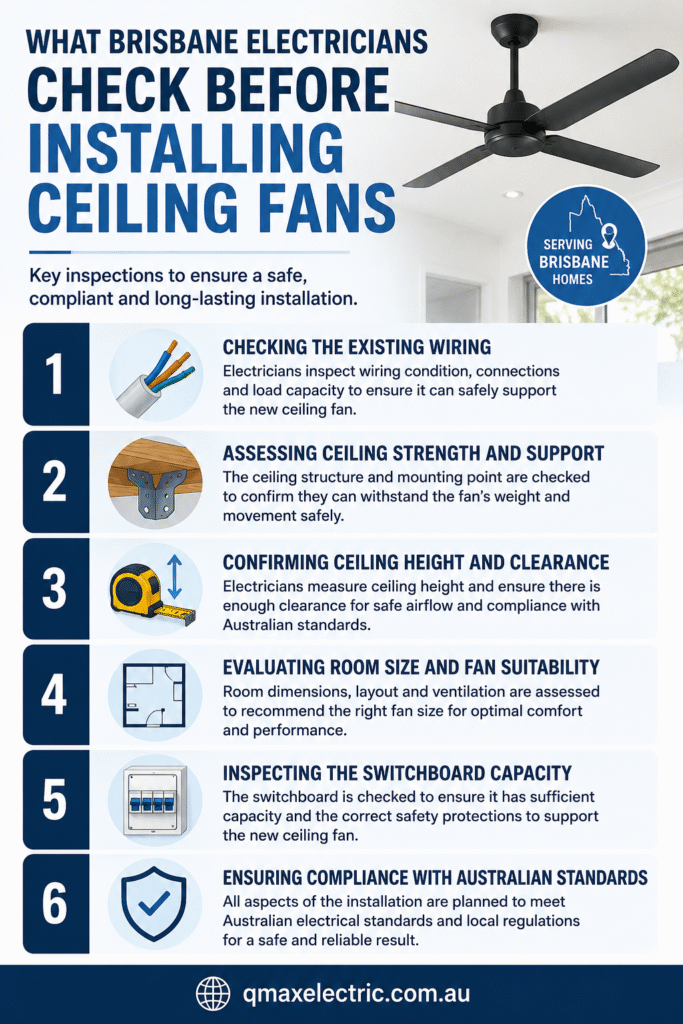
- Inspecting the Switchboard Capacity
Before installing a ceiling fan, electricians may inspect the home’s switchboard to ensure it has sufficient capacity for the additional electrical connection.
Older switchboards may require upgrades, particularly if the property still uses outdated ceramic fuses or lacks modern safety switches. Electricians also verify that the circuit supplying the fan is protected correctly.
This inspection helps prevent overloaded circuits and improves overall electrical safety within the home.
- Checking for Existing Light Fixtures
Many ceiling fan installations involve replacing existing light fittings. Electricians inspect the current fixture location to determine whether it is suitable for fan installation.
They also check whether the homeowner wants a ceiling fan with integrated lighting. If so, additional wiring adjustments may be necessary to allow separate control of the fan and light functions.
Careful planning ensures the new installation remains practical and visually appealing.
- Reviewing Outdoor Installation Requirements
Outdoor ceiling fans are popular across Brisbane patios, alfresco areas, and verandahs. However, electricians must confirm the fan is rated for outdoor use before installation.
Outdoor fans need protection against moisture, humidity, and changing weather conditions. Electricians inspect the installation area and recommend weather-resistant models where necessary.
This helps improve durability and ensures safe operation in outdoor environments.
- Ensuring Compliance With Australian Standards
Licensed electricians in Brisbane must complete ceiling fan installations according to Australian electrical standards and local safety regulations.
This includes proper mounting, secure wiring, safe isolation procedures, and testing after installation. Electricians also ensure all components are installed correctly to minimise electrical hazards and future maintenance issues.
Professional installation provides peace of mind and helps homeowners avoid costly repairs or safety concerns later on.
Conclusion
Installing a ceiling fan involves much more than attaching blades to the ceiling. Brisbane electricians complete a series of detailed safety and structural checks to ensure the fan operates efficiently and safely for years to come.
From inspecting wiring and ceiling support to checking switchboard capacity and compliance requirements, these assessments play an important role in delivering a reliable installation. Hiring a qualified affordable electrician in Brisbane ensures your ceiling fan is installed correctly, safely, and suited to your home’s specific needs.
Hire Professional Electricians Today
No need to search for ceiling fan installers in Brisbane since QMAX Electric has you covered. Dial 07 4801 0003 to hire the best electricians now.
Frequently Asked Questions about Ceiling Fan Installation
- Why can’t a ceiling fan be installed directly onto a standard light fitting bracket?Standard light fitting brackets are not designed to handle the constant movement and weight of a ceiling fan. Electricians usually replace them with reinforced mounting brackets that can safely support vibration and long-term operation.
- Do Brisbane homes with older wiring need electrical upgrades before ceiling fan installation?In many cases, yes. Older Brisbane properties may have ageing wiring, limited switchboard capacity, or outdated safety systems that need upgrading before a ceiling fan can be safely connected.
- Can electricians install a ceiling fan where no existing wiring is present?Yes. Licensed electricians can run new wiring, install dedicated switches, and create entirely new connection points for ceiling fans in rooms that previously had no ceiling fixture.
- What factors determine the ideal ceiling fan size for a room?Electricians consider room dimensions, ceiling height, ventilation, insulation, and furniture layout before recommending a fan size. Choosing the wrong blade span can reduce airflow efficiency and comfort.
- Are special ceiling fans required for Brisbane’s outdoor entertaining areas?Outdoor areas such as patios and verandahs require weather-resistant ceiling fans designed to withstand humidity and moisture exposure. Indoor fans are generally not suitable for these environments.
- Why do electricians inspect the switchboard before installing a ceiling fan?The switchboard inspection helps determine whether the electrical system can safely support additional appliances. Electricians also check for safety switches and overloaded circuits that may create electrical risks.
- Can a ceiling fan and light be controlled separately?Yes. Electricians can install separate wall switches or remote-control systems that allow independent operation of the fan speed and light functions for greater convenience.
- Is ceiling height important when installing a ceiling fan?Absolutely. Australian safety standards require minimum clearance between the fan blades and the floor. Electricians may recommend flush-mounted fans or extension rods depending on the ceiling height.
- What happens if the ceiling structure is too weak for a ceiling fan?If the ceiling lacks adequate support, electricians may install additional bracing or reinforcement to safely distribute the fan’s weight and movement across the ceiling structure.
- Why is professional ceiling fan installation recommended instead of DIY installation?Professional electricians ensure the fan is correctly wired, securely mounted, compliant with Australian regulations, and properly tested. DIY installation can create serious safety risks and may void product warranties or insurance coverage.