
Split systems consist of two main units: an indoor unit that distributes cool or warm air and an outdoor compressor that releases heat. This setup is ideal for targeted cooling, making it energy efficient and cost-effective for residential spaces.
Homeowners often prefer split systems due to their quiet operation, flexible installation options, and ability to control temperatures in individual rooms. However, proper split system installation Red Hill is critical to ensure efficiency and system longevity.
A poorly installed system can lead to refrigerant leaks, higher energy bills, and reduced cooling performance. That’s why engaging a qualified electrician is essential for safe and compliant installation.
Why Professional Installation Matters?
Installing a split system is not just about mounting equipment on a wall. It involves electrical wiring, refrigerant handling, drainage setup, and pressure testing.
A licensed electrician ensures that:
- Electrical connections meet Australian safety standards.
- Circuit loads are properly assessed.
- The system is installed without risk of short circuits or overload.
- Compliance with manufacturer warranty conditions is maintained.
Professional installation also ensures optimal airflow positioning, which directly impacts cooling efficiency and comfort levels.
Local Installation Services in Brisbane Suburbs
Different suburbs have varying housing styles, insulation levels, and cooling requirements. That’s why local expertise matters when selecting installation services.
For example, homeowners searching for split system installation in Red Hill often require compact solutions suitable for older Queenslander homes with unique structural layouts.
In contrast, split system installation St Lucia commonly involves modern apartments and student housing, where space efficiency and noise control are key priorities.
Meanwhile, split system installation in Yeronga typically focuses on family homes that require multi-room cooling efficiency and long-term energy savings.
Each location demands a tailored installation approach to ensure maximum performance and cost efficiency.
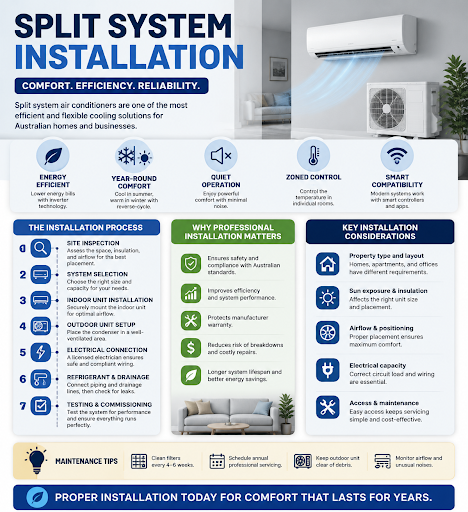
Step-by-Step Installation Process
Understanding the installation process helps homeowners make informed decisions and avoid unnecessary costs.
1. Site Inspection
A technician evaluates room size, insulation, and airflow patterns to determine the best unit placement.
2. System Selection
The correct capacity (measured in kW) is chosen based on cooling requirements.
3. Indoor Unit Installation
The indoor unit is securely mounted on a wall with proper alignment for airflow distribution.
4. Outdoor Unit Setup
The compressor is placed in a ventilated area to ensure efficient heat release and reduced noise.
5. Electrical Wiring
A licensed electrician connects the system to the electrical board, ensuring safety compliance.
6. Refrigerant and Drainage Connection
Copper piping and drainage lines are installed and sealed to prevent leaks.
7. Testing and Commissioning
The system is tested for performance, airflow, and energy efficiency before handover.
Key Benefits of Split System Installation
Split systems offer several advantages that make them a preferred choice across Australian households:
- Energy-efficient cooling and heating
- Zoned temperature control for individual rooms
- Quiet indoor operation
- Modern smart control compatibility
- Lower long-term energy costs
These benefits make split systems ideal for both small apartments and large family homes.
Choosing the Right Technician
Selecting the right professional for split system installation in St Lucia is crucial for system performance and durability. A qualified installer should have:
- Proper licensing and certification
- Experience with multiple brands and models
- Strong understanding of electrical safety standards
- Transparent pricing and service warranties
Hiring a skilled electrician ensures your system runs efficiently and reduces the risk of future repairs.
Maintenance Tips for Long-Term Performance
Regular maintenance keeps your system operating at peak efficiency. Homeowners should:
- Clean filters every 4–6 weeks
- Schedule annual servicing
- Check the outdoor unit for debris buildup.
- Monitor unusual noises or airflow changes.
Preventive maintenance helps extend system lifespan and reduces energy consumption.
Cost Factors to Consider
The cost of installation depends on several factors, including:
- Unit size and brand
- Installation complexity
- Property structure
- Electrical upgrades required
- Location and accessibility
For example, homes requiring split system installation Red Hill may face additional costs due to older wiring systems, while split system installation St Lucia apartments may require specialised mounting solutions.
Similarly, split system installation Yeronga properties may need multi-room configurations, influencing overall pricing.
Energy Efficiency and Environmental Impact
Modern split systems are designed to reduce energy consumption while maintaining strong cooling performance. Many units now use inverter technology, which adjusts compressor speed based on room temperature.
This not only reduces electricity bills but also lowers environmental impact. Proper split system installation in Yeronga by a qualified electrician ensures the system operates at maximum efficiency from day one.
Split system air conditioning remains one of the most practical and efficient cooling solutions for Australian homes. Whether you are upgrading an old unit or installing a new system, professional expertise is essential for safety, performance, and long-term value. Proper planning, quality split system installation Red Hill, and regular maintenance ensure consistent comfort throughout the year. And if you are looking for a trusted name, then QMAX Electric is your premier destination.
FAQs About What Should You Know Before Split System Installation in Australian Homes?
- How long does split system installation take?Most installations are completed within 3 to 6 hours depending on complexity.
- Do I need a licensed electrician for installation?Yes, a licensed electrician is required to ensure safety and compliance.
- What size split system do I need?It depends on room size, insulation, and sun exposure.
- Can split systems be used for heating?Yes, most modern systems offer reverse-cycle heating.
- How often should filters be cleaned?Every 4–6 weeks for optimal performance.
- Is installation different for apartments?Yes, apartments may require special mounting and drainage solutions.
- What affects installation cost the most?System size, wiring needs, and property structure are key factors.
- Are split systems energy efficient?Yes, especially inverter models that adjust power usage automatically.
- Can I install a split system myself?No, installation must be done by a licensed professional.
- How do I know if my system is installed correctly?Proper airflow, quiet operation, and stable temperature control indicate correct installation.