
Installing an air conditioning system is not just about placing a unit on a wall and switching it on. A proper installation in Brisbane or the Teneriffe suburb requires technical knowledge, planning, and safety precautions to ensure the system operates efficiently and without risks. When installed incorrectly, air conditioners can lead to electrical hazards, refrigerant leaks, poor performance, and even property damage. Professional installers follow specific procedures to ensure the installation is completed safely and reliably.
Below is a closer look at how air conditioning installation is carried out while minimising hazards.
Careful Assessment Before Installation
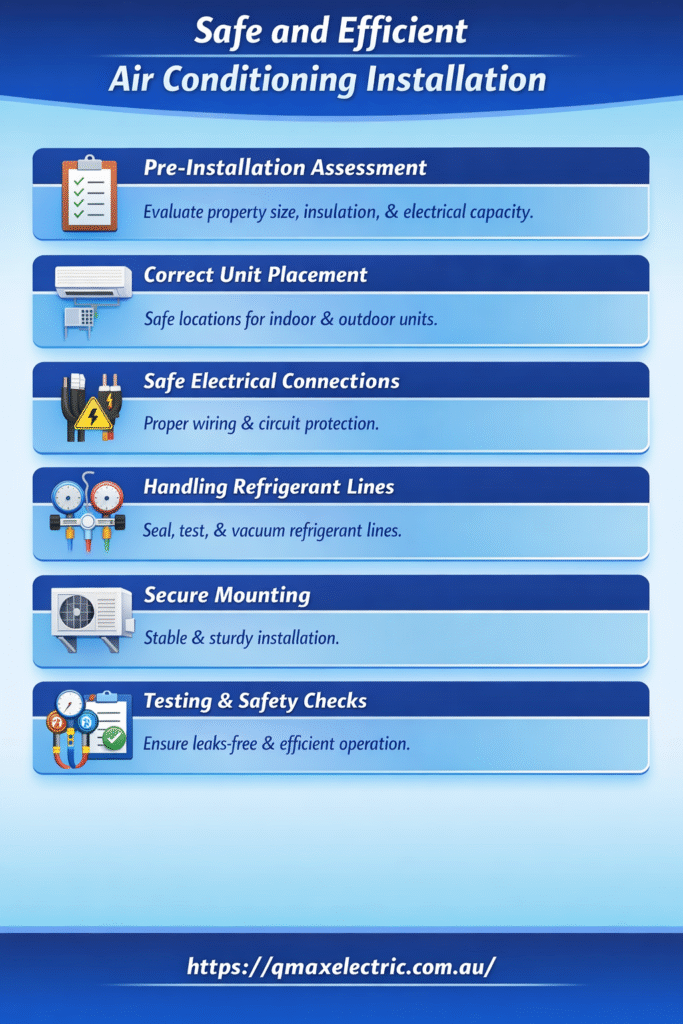
Before beginning an air conditioning installation in Brisbane or its surrounding suburbs, technicians conduct a detailed assessment of the property. This step is essential to determine the most suitable air conditioning system and the safest installation approach.
During the assessment, installers typically consider the following:
- The size and layout of the room or building
- Insulation levels and airflow patterns
- Electrical capacity of the property
- Suitable locations for indoor and outdoor units
- Accessibility for maintenance and servicing
Proper planning helps avoid safety issues later and ensures the system delivers optimal cooling performance.
Selecting the Right Location for Units
Correct placement of both indoor and outdoor units plays a major role in safe installation. Installers ensure the indoor unit is mounted securely on a stable wall and positioned where airflow can circulate effectively.
Outdoor units are placed in areas that allow sufficient ventilation and protection from environmental damage. The installation team also ensures the location does not obstruct walkways or create safety hazards.
Choosing the right location helps prevent overheating, reduces noise issues, and allows the system to operate efficiently.
Safe Electrical Connections
Air conditioning systems require reliable electrical connections to function properly. During installation, technicians ensure the wiring meets Australian electrical safety standards.
This involves:
- Connecting the unit to the correct power supply
- Installing appropriate circuit protection
- Securing cables to prevent damage or exposure
- Ensuring all electrical connections are properly insulated
By following strict electrical safety procedures, installers reduce the risk of short circuits, electrical faults, or fire hazards.
Proper Handling of Refrigerant Lines
Refrigerant plays a key role in the cooling process, and incorrect handling can create environmental and safety risks. Professional technicians install refrigerant lines carefully to prevent leaks and ensure efficient operation.
They also:
- Seal and insulate refrigerant pipes
- Pressure test the system
- Vacuum the lines to remove moisture and air
These steps help maintain system efficiency while preventing damage to the compressor and other internal components.
Secure Mounting and Structural Stability
Another critical safety factor during air conditioning installation in Teneriffe or any other suburb is ensuring that the air conditioning units are securely mounted. Installers use strong brackets and mounting systems designed to support the weight of the unit.
For outdoor systems, technicians ensure the unit is placed on a stable surface or wall bracket that can withstand environmental conditions such as wind and vibration. Secure installation prevents accidents and protects both the equipment and surrounding structures.
System Testing and Final Safety Checks
Once the installation is complete, technicians carry out detailed testing to confirm everything is functioning correctly. This includes checking airflow, cooling performance, electrical connections, and refrigerant pressure.
Final safety checks ensure:
- The system operates efficiently
- There are no leaks or electrical issues
- All components are securely installed
- The unit is safe for long term use
After testing, installers usually guide homeowners or property managers on how to operate and maintain the system safely.
The Importance of Professional Installation
Air conditioning systems are complex pieces of equipment that require expert handling. Attempting a DIY installation can increase the risk of electrical hazards, refrigerant leaks, and poor performance.
Professional installers follow strict safety guidelines, use specialised tools, and have the experience needed to complete installations efficiently. Their expertise ensures your air conditioning system runs safely, performs effectively, and provides reliable comfort for years to come.
Call Us to Book Our Service or to Get a Quote
To schedule an air conditioning installation service by our professional electricians or to get an estimate from QMAX Electric, call 07 4801 0003 now.
Faq About Hazard-Free Air Conditioning Installation
- Why is professional planning important before installing an air conditioning system?Proper planning helps determine the correct system size, optimal unit placement, and electrical requirements. This ensures efficient cooling while preventing safety risks such as overloaded circuits or poor airflow.
- What risks can occur if an air conditioner is installed incorrectly?Improper installation can lead to electrical faults, refrigerant leaks, reduced energy efficiency, poor cooling performance, water leakage, and even damage to walls or ceilings.
- How do technicians ensure that electrical connections are safe during installation?Qualified installers follow Australian electrical standards by using appropriate wiring, circuit protection devices, secure insulation, and proper grounding to minimise the risk of electrical hazards.
- Why is correct placement of the outdoor unit important for safety and performance?Outdoor units require adequate ventilation and stable mounting to prevent overheating, noise issues, and structural damage. Proper placement also protects the system from environmental wear.
- What steps are taken to prevent refrigerant leaks during installation?Technicians seal connections carefully, pressure test the system, and vacuum the refrigerant lines to remove moisture and air. This helps ensure the cooling system operates efficiently and safely.
- How does proper installation affect the lifespan of an air conditioning system?A correctly installed system experiences less strain on components such as compressors and fans, which can significantly extend the equipment’s operational life.
- What tools do professionals use to ensure safe air conditioning installation?Technicians typically use specialised tools such as vacuum pumps, manifold gauges, refrigerant leak detectors, electrical testing devices, and mounting equipment to ensure accurate and safe installation.
- Can poor airflow placement create hazards in air conditioning systems?Yes. Incorrect airflow placement can cause uneven cooling, increased strain on the system, and condensation problems, which may lead to moisture damage over time.
- What final safety checks are usually performed after installation?Installers test cooling performance, verify refrigerant pressure, inspect electrical connections, confirm secure mounting, and ensure the system operates smoothly without leaks or faults.
- How can homeowners maintain safety after the air conditioner is installed?Regular servicing, cleaning filters, checking outdoor unit clearance, and scheduling professional inspections help maintain safe operation and prevent potential system faults.