
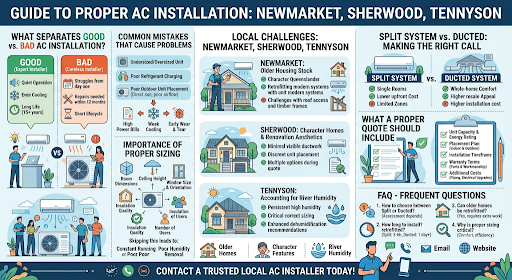
Two homes can have the exact same air conditioner installed and end up with completely different results: one runs quietly, cools evenly, and lasts fifteen years; the other struggles from day one and needs repairs within twelve months. The difference almost never comes down to the brand of the unit. It comes down to who installed it, how carefully, and whether the job was matched to the actual home. Finding a qualified AC installer who gets these fundamentals right is the single biggest factor in whether your investment pays off.
The Mistakes That Cause Most AC Problems
Ask any experienced technician what causes the majority of callbacks, and the answers are surprisingly consistent: undersized or oversized units, poor refrigerant charging, and outdoor units placed somewhere that restricts airflow or bakes in direct sun all day. None of these is visible to a homeowner at the time of installation; they only show up months later as high power bills, weak cooling, or a system that short-cycles and wears out early.
This is why the installation process matters more than the sticker on the unit. A correctly sized, properly charged, well-placed system from a mid-range brand will consistently outperform a premium unit installed carelessly.
Getting the Sizing Right the First Time
Not all air conditioning installs are created equal, and the wrong choice can cost you comfort and money for years. Cooling capacity is measured against the specific space it needs to serve, not guessed at. A professional assessment accounts for room dimensions, ceiling height, window size and orientation, insulation quality, and how many people typically use the space. Skipping this step and going by rough square footage alone is how so many homes end up with a unit that runs constantly but never quite gets the room comfortable or one that cools too fast without properly removing humidity, leaving the air feeling clammy despite a cool reading on the thermostat.
AC Installation in Newmarket: Working With Older Housing Stock
Newmarket’s mix of character Queenslanders and newer infill housing means installers regularly deal with limited roof cavity access, timber-frame construction, and retrofitting modern systems into homes never designed for them. Anyone comparing quotes for AC installation in Newmarket should ask specifically how the installer plans to route ductwork or refrigerant lines through older wall cavities, since this is where costs and complications tend to hide.
A capable AC installation service in Newmarket will flag these challenges upfront during the site visit rather than discovering them halfway through the job.
AC Installation in Sherwood: Keeping the Character Intact
Sherwood homeowners are often just as concerned with how a system looks as how it performs. For AC installation Sherwood, discreet indoor unit placement and minimal visible ductwork are common priorities, particularly in renovated character homes where exposed piping or bulky bulkheads can undercut the aesthetic the renovation was meant to achieve.
Experienced providers offering AC installation service in Sherwood typically present multiple placement options during the quote stage, balancing airflow efficiency against the visual impact on each room.
AC Installation in Tennyson: Accounting for River Humidity
Properties near the river face a cooling challenge that inland suburbs simply don’t: persistent humidity that makes air feel warmer than the thermostat suggests. For AC installation in Tennyson, correct sizing becomes even more critical, since an oversized unit will cool the air quickly but shut off before properly extracting moisture, leaving rooms feeling damp and uncomfortable.
A specialist AC installation service in Tennyson will factor local humidity levels into system selection, sometimes recommending units with enhanced dehumidification modes specifically for this reason.
Split System or Ducted: Making the Right Call
The split-versus-ducted decision usually comes down to three questions: how many rooms need cooling, whether the home already has ceiling space for ductwork, and what the budget allows both upfront and long-term. Split systems suit single rooms or homes needing cooling in just one or two zones, while ducted systems offer whole-home comfort and better resale appeal but come with a higher installation cost and more invasive fitout.
What a Proper Installation Quote Should Include
Before signing off on any quote, homeowners should confirm it clearly outlines the unit’s cooling capacity and energy rating, indoor and outdoor unit placement, expected installation timeframe, warranty terms on both parts and workmanship, and any additional costs for items like extended piping or electrical upgrades. A vague, one-line quote is often a sign of corners being cut somewhere in the process.
Get Your AC Installation Done Right the First Time
Whether you need AC installation in Newmarket, Sherwood, or Tennyson, the quality of the installer matters far more than the brand on the box. Choose the experienced AC installer of QMAX Electric who takes the time to assess your home properly, and you’ll get a system that performs reliably for years rather than one that needs constant attention. Contact a trusted local AC installation service today to book your site assessment.
FAQs About What Actually Separates a Good AC Installation From a Bad One?
- How do I know if my home needs a split system or ducted air conditioning?It depends on how many rooms need cooling and your budget a professional assessment will confirm the best fit.
- How long does installation typically take?Split systems usually take 3–6 hours, while ducted installations can take a full day or more.
- Can an air conditioner be installed in an older home?Yes, though older homes may require extra work for ductwork routing or mounting due to construction style.
- What size unit does my room need?This is calculated based on room size, insulation, ceiling height, and sun exposure during a proper site assessment.
- Why does humidity affect which system I should choose?Humid areas benefit from units with strong dehumidification capability to avoid a damp, uncomfortable feel indoors.
- Do I need an electrician as well as an installer?Most licensed installers handle both mechanical and electrical aspects, though larger systems may need panel upgrades.
- How often should a newly installed system be serviced?Annual servicing is generally recommended to maintain efficiency and catch small issues early.
- Will installation void my home’s warranty or insurance?No, provided the work is completed by a licensed professional and properly documented.
- Can outdoor unit placement really affect performance?Yes, direct sun exposure and poor airflow around the outdoor unit can noticeably reduce efficiency.
- How soon can I get a quote for installation?Most local providers can arrange a site visit within a few days depending on current demand.